Below is my ramblings of what started effectively four months ago when I began learning about Python coding…
This is October progress…
The Journey from Manual Hell to Semi-Retirement Dreams
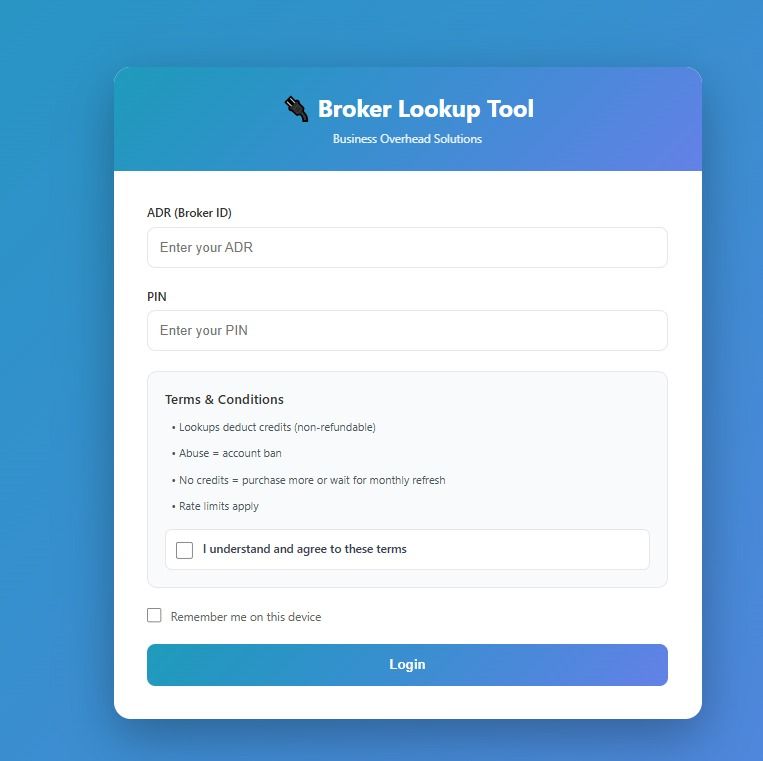
When I set out to automate my business processes, I had a clear goal: semi-retire by 45 and make my life easy. What started as repetitive manual tasks has evolved into a (what i class as a ) sophisticated broker portal that handles a chunk of low profit activity. automatically. Here’s what I learned along the way.
## The Problem: Death by Spreadsheet
Picture this: our brokers used to whataspp me personally with work requests. Now some of them are hard working “money-never-sleeps”, “why aren’t you answering my message at 10pm on sat night” mentality. Before I knew it, I was mentally fatigued by them. And when people except the gold plated service for free and become used to it; well familiarity breeds contempt.
So we brought in ticketing software at the start of 2025. On the whole it has worked really well but alas one broker is rude; continuous back and forth, doesnt read knowledge bases and yet asks the same repetitive question over and over. And to top of it, the manner in which he asks was or at least was perceived as rude.
Anyway we analysed 300 tickets over a 6month period… 60% of them were EAC requests. For those not in the energy sector; this is the estimated annual consumption of a meter. Its pronounced eeeee-aaaa-kkk
And so what would we do to service these types of tickets, well log into a database or spreadsheet report from a supplier, type the answer in and hit reply. Do this 5x a day minimum for 30 days a month and suddenly it becomes a chore.
It was the kind of soul-crushing repetitive work that automation was invented to eliminate.
## Learning APIs and Endpoints: The Foundation
The first major learning curve was understanding how APIs and endpoints actually work. Before this project, these were just buzzwords. Now they’re the backbone of everything I’ve built.
**What I discovered about endpoints:**
**Build modules;** we have built scripts which act as utilities so another script can call upon it. Piece the bricks together like a software engineer.
**Embrace webhooks:** Event-driven architecture scales effortlessly. My server doesn’t constantly poll for updates—it responds when notified.
**Test in production (carefully):** I use test Stripe links, sandbox environments, and detailed logging. But eventually, you have to flip the switch and trust your automation with real data.
## What’s Next
The automation never stops. I’m already eyeing other manual processes:
– Automated contract submission to suppliers
– Commission report processing
– Monthly reconciliation tasks
– Price book updates from multiple suppliers
Each automation compounds the previous ones. Every hour saved is an hour I can spend on strategic work—or not working at all.
**That’s the goal, isn’t it?** Not to eliminate work entirely, but to eliminate the *meaningless* work. The repetitive, error-prone, soul-crushing tasks that don’t move the needle.
Semi-retirement by 45? With automation like this, I might get there sooner. To quote a friend; “you either live your life or spend your days.”
—
*This post is part of my coding and recovery journey on “Stronger Than The Snap.” Building businesses, building systems, and building a life where Python does the boring bits.*